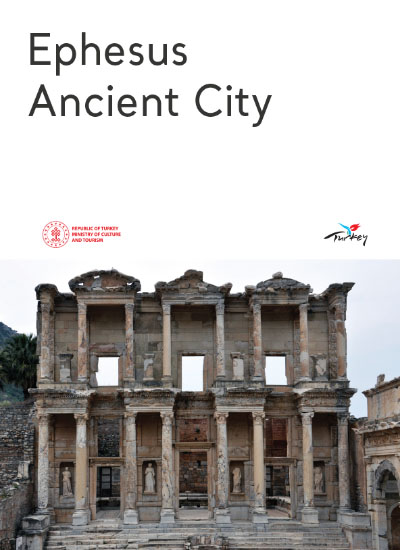
Ephesus, situated on the western coast of Asia Minor (modern-day Turkey), was a city of great importance and size in the ancient Mediterranean world. Originally founded as an ancient Greek settlement on the Aegean Sea, it later became the capital of Roman government in Asia. The city was a key player in East-West trade, and its Mediterranean harbour was one of the most significant for exporting products to the ancient world. The city developed around an ancient shrine of the earth goddess Artemis and later became a key city in the expansion of Christianity, from which St Paul launched many of his missions. The city has a rich history dating back to 6,000 BC, when the earliest settlement in the area was established. During the Bronze Age, the Greeks settled on the coast of Asia Minor and later colonized the area during the age of Greek colonization (ca. 700 BC). Ephesus has had a rich history of being ruled by various conquerors, including the Persians and Greeks. During the Roman Republic, it held the status of a 'free' city, although it was under Roman control. The city was permitted to mint its own coin and operate its own city council. In the Imperial era, Ephesus became the capital of the province of Asia. Augustus' reforms improved the city's economy and initiated a period of peace and prosperity that lasted until the third century AD. Ephesus boasts of impressive ruins that were constructed during the reigns of Augustus (r. 27 BC - 14 AD) and his successor Tiberius (r.14-37 AD). Notably, the town-hall (the Prytaneion), a hippodrome stadium, and new aqueduct lines were built during this time. It is worth mentioning that civic development continued on a grand scale throughout the Pax Romana (a time of prosperity and stability roughly spanning from Augustus to 180 AD). During this period, the renowned theatre underwent renovations. Additionally, the
Odeum, which was used for city council meetings and theatrical performances, the library of Celsus, bathhouses, and public latrines were constructed. The Agora, or city square, served as the centre of the business district of ancient Ephesus. It acted as a hub for trade that arrived in the city from across the Empire, particularly the Roman East. The marketplace covers an area of 112 square meters and is surrounded on all four sides by a two-story stoa, which presumably housed merchant stalls. Its construction began during the reign of Tiberius in approximately 23 AD and was completed about thirty years later. According to dedicatory inscriptions, it appears to have been open for business as early as 43 AD.The market could have been supplied by the city's harbour, which was surrounded by warehouses filled with products that were being shipped west or arriving from the eastern provinces and beyond via caravans of merchants. Today, you can relive this magnificent history through an immersive journey at the Ephesus Experience Museum — where ancient Ephesus comes to life. Your ticket includes entry to both the Ancient City of Ephesus and the Ephesus Experience Museum. While You Are Here... Şirince is a village located in the Selçuk district that is worth visiting. It was settled in 1923 by Turks who migrated from Greece after the Greeks left as a result of the Turkey-Greece Population Exchange. Şirince is known for its viticulture, winemaking, and olive cultivation, and has gained a touristic identity since the 1990s. The village's architectural texture is noteworthy, with old Greek houses serving as hostels.